
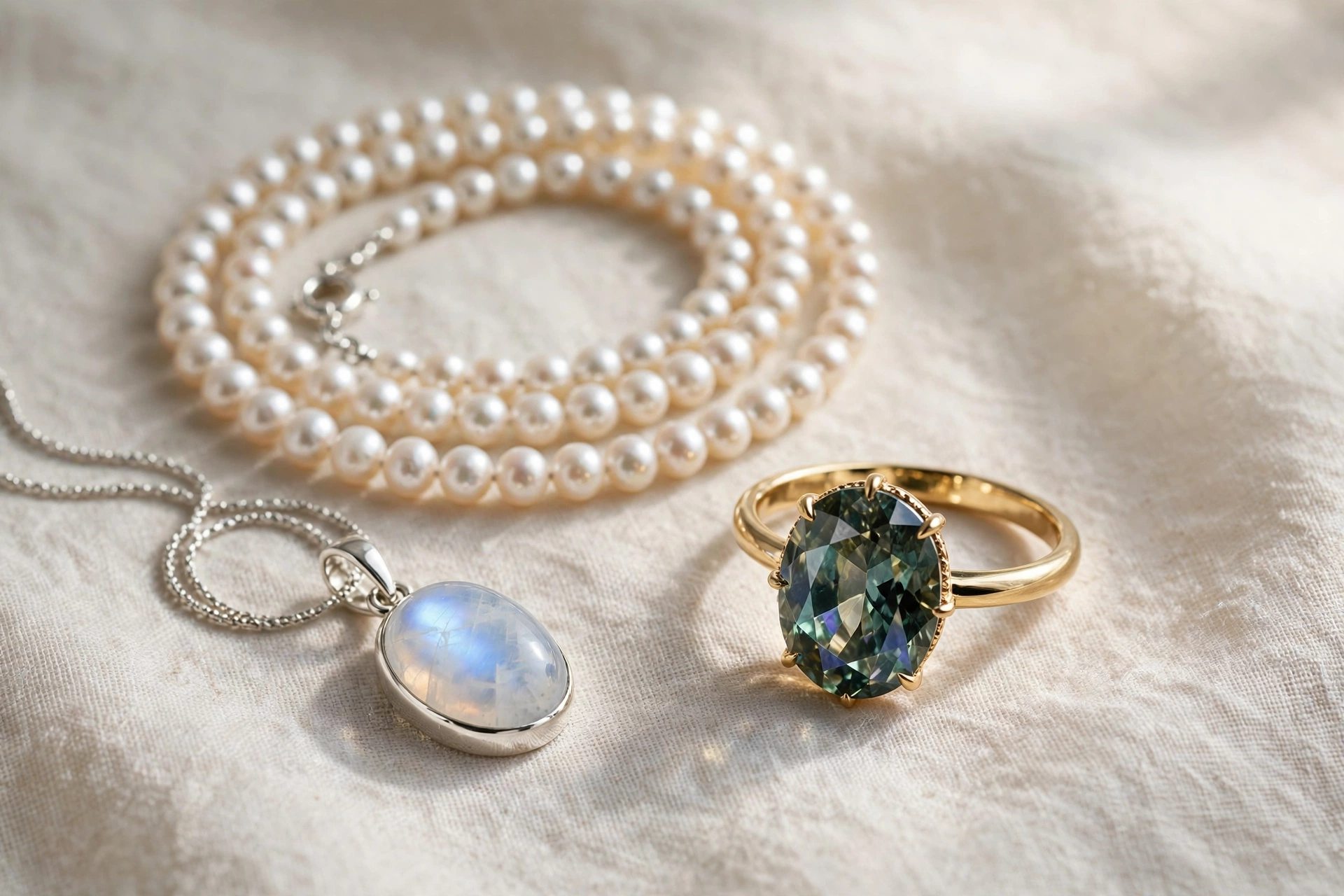
A June birthstone marks a June birthday with a gem that suits the month. June has three stones, not one: pearl, alexandrite and moonstone. In fact, each one looks different, and each one carries its own story. This guide covers all three, plus the full 12-month chart, gemstone colours and UK buying tips. First, a quick note: birthstone meanings come from folklore and tradition. In fact, no science shows that a stone changes luck, health or mood. Treat the meanings as stories, not facts.
The modern list took shape in 1912. In 1912, the American National Association of Jewelers set the 12 stones we still use today. The list has changed a little since then. For example, tanzanite joined December in 2002. Spinel joined August in 2016. Also, different groups still use slightly different lists. As a result, there is no single official list. In short, use the modern list below as your starting point.
What Is a June Birthstone?
A June birthstone is the gem linked to June. In fact, June is unusual. It has three stones, while most months have one or two. The three are pearl, alexandrite and moonstone. For example, pearl suits classic tastes. Alexandrite suits people who love rare, colour-changing gems. Finally, moonstone suits soft, glowing styles. No other month offers three such different gems. In short, June gives you more choice than any other month.
June’s Three Stones
June’s three stones could not look more different. For example, pearl is soft and white. Alexandrite changes colour in different light. Also, moonstone glows blue from within. Together they cover classic, rare and dreamy styles. In fact, pearl has marked June for centuries. Alexandrite and moonstone joined the modern list later. In short, all three still count today. First, look at each one below. Then pick the stone that suits you best.
Pearl: The June Classic
Pearl is the birthstone June is best known for. It is the only gem that comes from a living creature. For example, oysters and mussels form pearls inside their shells. In folklore, pearl has long stood for purity and innocence. In fact, a pearl necklace suits weddings and June birthdays alike. Also, pearl needs gentle care. Next, keep it away from perfume and hairspray. Finally, wipe it with a soft cloth after wear.
Alexandrite: The Colour-Changing Gem
Alexandrite is the rarest of the three. In fact, it changes colour with the light. In daylight it looks green or bluish-green. Next, under warm indoor light it turns red or purplish-red. For example, workers found it in Russia’s Ural Mountains in the 1830s. It took its name from the young future Tsar Alexander II. Also, alexandrite rings make a striking June gift. Alexandrite jewellery rings suit someone who wants a stone no one else has. In short, alexandrite is the collector’s choice of the three.
Moonstone: The Stone of New Beginnings
Moonstone shows a soft blue glow called adularescence. For example, the light seems to float across the stone as you turn it. In folklore, moonstone stands for new beginnings and calm. Also, it suits soft, romantic jewellery. Moonstone is softer than sapphire or diamond. Next, treat it gently and store it apart from harder gems. In short, moonstone is the dreamiest of the three.
Why Does June Have Three Stones?
Pearl is the old June stone. In fact, it has marked June birthdays for centuries. The modern list added two more. Next, alexandrite joined as a rare alternate. Then moonstone joined as a softer, glowing option. For example, old lists gave June only pearl. The 1912 list kept pearl first. It added alexandrite and moonstone as alternates. As a result, all three count as June stones today. Together they give June more choice than any other month. In short, June’s three stones cover classic, rare and dreamy tastes.
The 12-Month Chart
Use this chart to find any month’s stone. Below is the modern list used in the UK and the USA.
The January birthstone is garnet, a deep red stone. Next, amethyst is the February birthstone, a purple quartz. What stone is March? In fact, aquamarine is March’s stone, a pale blue gem. The birthstone month August is peridot, with spinel as the alternate. Also, October claims the opal birthstone. The birthstone for December is turquoise, with tanzanite as the modern alternate. Finally, the topaz stone serves as November’s alternate, while citrine leads the month.
First, January — garnet, February — amethyst, March — aquamarine. Next, April — diamond, May — emerald, June — pearl, alexandrite and moonstone. Then, July — ruby, August — peridot, September — sapphire. Finally, October — opal, November — citrine, December — turquoise.
June Birthstone Meanings
June birthstone meanings come from folklore. For example, pearl has long stood for purity and innocence. Alexandrite stands for good fortune and balance in old stories. Also, moonstone stands for new beginnings and calm. In fact, none of these claims has scientific proof. Treat them as tradition, not fact. In short, pick the stone you love, not the meaning you hope for.
Gems by Colour: Red, Pink, Yellow and Black
Colour helps you pick a stone. For example, stones that are red include ruby and garnet. Also, both suit bold, classic jewellery. Next, pink precious gems include pink sapphire and pink tourmaline. For soft, romantic styles, try pink crystals such as rose quartz. Pink sapphire colour ranges from pale blush to vivid pink. Also, yellow gemstones, such as citrine and yellow sapphire, suit summer. Yellow sapphire brings a sunny glow to a ring or pendant. Next, black stones, such as onyx and black sapphire, suit bold looks. A black colour stone adds drama to an evening outfit. Finally, green stones suit June too. Emerald is May’s stone, but green aventurine and jade suit June gifts. In fact, a green stone adds a fresh, natural feel. In short, start with the colour you love, then find the stone that carries it.
What Does Jade Represent?
Jade has a long history in Chinese tradition. So what does jade represent? Wisdom and balance, above all. People also link it with calm and good fortune. For example, aventurine is a green quartz with its own story. Also, in folklore it links with luck and opportunity. Next, both stones suit people who like meaning with their jewellery. In short, jade speaks of wisdom, while aventurine speaks of luck.
Pisces and Its Gemstones
Pisces runs from 19 February to 20 March. The Pisces gemstone birthstone is aquamarine, with amethyst as a second link. For example, aquamarine’s pale blue suits the water sign. Also, amethyst’s calm purple suits it too. Next, a Pisces gift can use either stone. In short, March babies get two lovely options.
How to Choose a June Birthstone Gift
Start with the person, not the stone. A June birthstone gift should suit their style. For example, pearl suits classic tastes. Alexandrite suits rare-gem lovers. Finally, moonstone suits soft, dreamy styles. Next, think about the piece. For example, a ring suits daily wear. A necklace suits special days. Also, check the setting. A strong setting protects softer stones such as pearl and moonstone. Birthstones are not the only jewellery with a meaning — see our Star of David jewellery guide for another symbolic choice. Finally, buy from a reputable UK jeweller. Also, ask about the stone’s source and care. In short, match the stone to the person, and the gift will land well.
Think about the occasion too. For example, a June birthday suits a personal piece. A graduation suits a bright alexandrite ring. Also, match the metal to the stone. Next, yellow gold warms pearl and moonstone. White gold suits alexandrite’s cool green. In short, the right metal lifts the stone.
Caring for Your June Birthstone Jewellery
Caring for June stones is simple. First, store each piece apart from other jewellery. In fact, hard stones can scratch soft ones. Next, wipe each piece with a soft, dry cloth after wear. Also, keep pearls away from perfume, hairspray and creams. Moonstone needs the same gentle care. Alexandrite is tougher, but it still likes a soft cloth and a safe box. Next, check the clasp and setting once a year. A loose stone can fall out without warning. Finally, a jeweller can tighten it in minutes. In short, gentle care keeps June gems bright for years.
June Birthstone FAQs
What is a June birthstone?
June has three: pearl, alexandrite and moonstone. For example, pearl is the classic choice. Alexandrite changes colour. Moonstone glows blue. Finally, pick the one that suits your style.
Which June stone is the rarest?
Alexandrite is the rarest of the three. In fact, fine stones are hard to find. That is why alexandrite rings cost more than pearl or moonstone pieces.
Is moonstone a June birthstone?
Yes. Moonstone is one of June’s three stones, along with pearl and alexandrite. Also, it shows a soft blue glow. It suits soft, romantic jewellery.
Can I wear June stones every day?
Yes, with care. For example, pearl and moonstone are soft, so they need gentle wear. Alexandrite is tougher. Finally, take any ring off for heavy work.
Which stone is mine if I was born in June?
Pearl, alexandrite or moonstone — all three are June stones. In short, pick your favourite.
Do the old meanings hold true?
In fact, no science backs them. The meanings come from folklore and tradition. Enjoy them as stories, not facts.
A little thought goes a long way. First, pick the June stone that suits the person. Next, choose a piece they will wear often. Then buy from a jeweller you trust. The right stone makes a June birthday feel special.



















Leave a Reply