
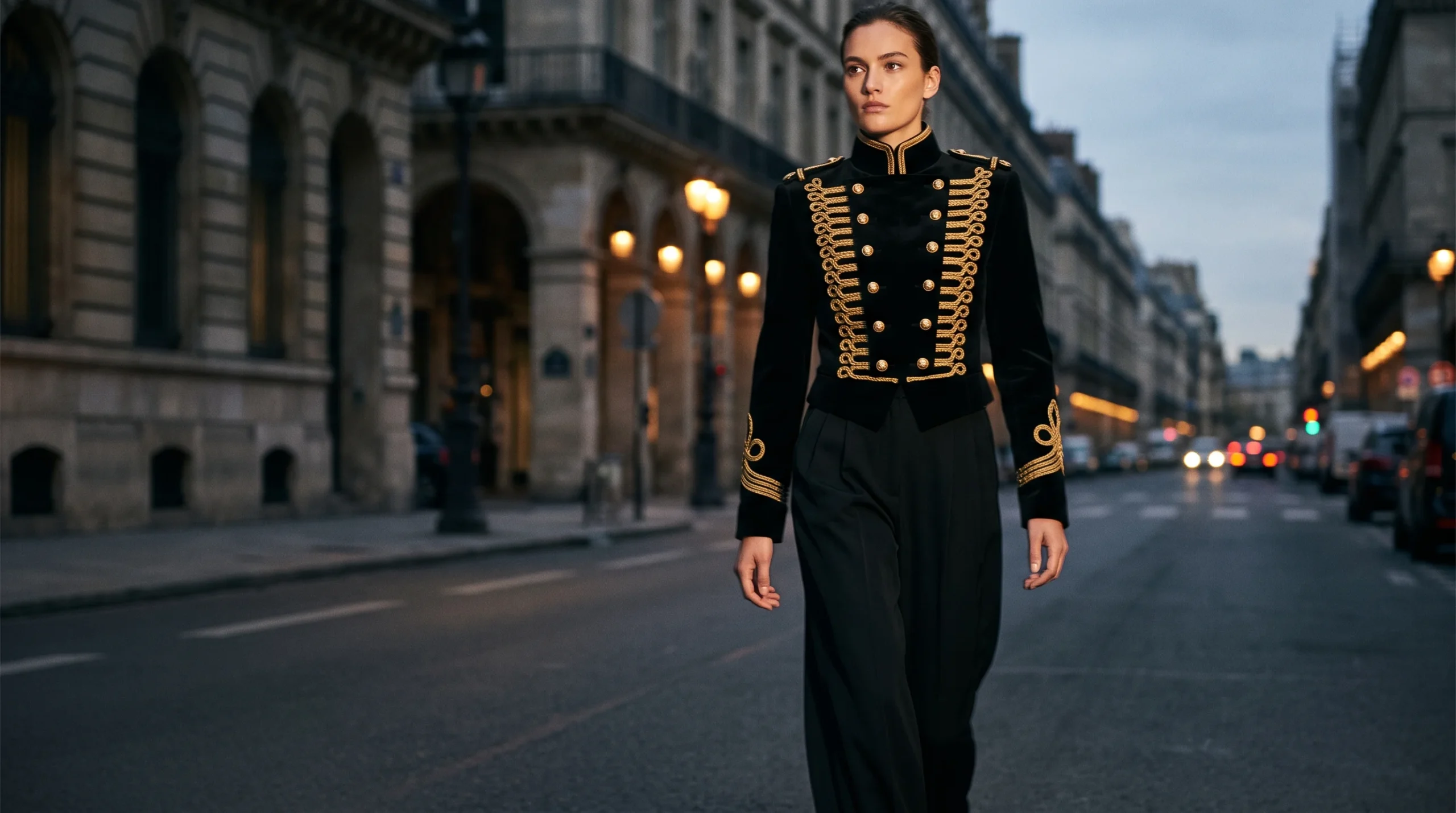
The Napoleon Jacket Revival
Outerwear trends often cycle between quiet minimalism and theatrical self-expression. For several years, fashion focused heavily on understated beige trenches and slouchy overcoats. However, structured silhouettes with sharp authority are now back in full force. Consequently, the napoleon jacket has emerged as the definitive focal point of this shift. It is rapidly reclaiming its place across major runways and everyday wardrobes.
In addition, this outerwear revival successfully balances historical pomp with modern street style. The garment does not feel out of place or archaic in contemporary settings. Instead, it provides an instant dose of polish and confidence. For example, wearing one encourages an upright stance and creates a clean silhouette. As a result, this piece turns an ordinary outfit into an intentional fashion statement.
What Is a Napoleon Jacket? Anatomy and Design Details
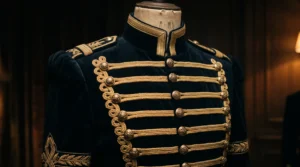
A napoleon jacket is a tailored garment inspired by 18th and 19th-century military regalia. It features a fitted cut, double-breasted metallic buttons, and pronounced shoulder pads. Furthermore, it incorporates a mandarin stand collar and horizontal cord embroidery known as frogging across the chest.
Unlike a conventional office blazer, this piece serves as both tailored suiting and wearable art. Specifically, the decorative braiding and braid trim along the cuffs and chest command immediate attention. Meanwhile, the stiff internal canvas retains its crisp lines throughout the day. Historically, these intricate details distinguished specific military ranks. Today, however, they function as rich textural accents that elevate modern layering. Shoppers often see terms like Hussar jacket, double-breasted dolman, or ringmaster jacket used interchangeably. Nevertheless, each variation shares the same core silhouette with high collars and metallic buttons.
The Historical Journey: From Battlefield Cavalry to Subculture Rebellion
The aesthetic codes behind this garment originated long before modern department stores existed. During the 16th century, Hungarian light cavalry units known as Hussars wore a fitted coat called a dolman. Interestingly, the heavy horizontal chest braiding was not merely decorative. In fact, it served a vital protective purpose by cushioning sword slashes during combat.
Later, in the early 19th century, Napoleon Bonaparte expanded decorative military ornamentation throughout France. The French Chasseurs and the Imperial Guard popularized high collars, broad padded shoulders, and brass button arrays. These visual elements clearly projected authority, discipline, and imperial grandeur. Moreover, Napoleon regularly appeared in portraits wearing these uniforms. Therefore, he established a standard for power dressing that long outlasted his empire.
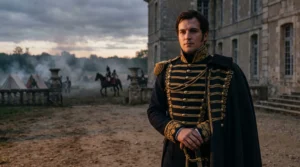
During the mid-20th century, counterculture artists stripped the garment of its militaristic connotations. For instance, 1960s London boutiques like Lord Kitchener’s Valet sold antique military coats to rock musicians. Icons like Jimi Hendrix and The Beatles transformed a symbol of imperial hierarchy into a badge of artistic rebellion. Subsequently, this rebellious energy resurfaced in the early 2000s under Hedi Slimane’s menswear designs. Style icons like Pete Doherty and Kate Moss soon embraced the slim military coat as the ultimate rock layer.
Decoding the Modern Runway Resurgence
Recently, luxury fashion houses have pushed the garment back into the global spotlight. Designers such as Alexander McQueen and Ann Demeulemeester have reimagined ceremonial uniform tailoring for contemporary runways. They skillfully pair intricate soutache embroidery with deconstructed hemlines, sheer fabrics, and matching tailored skirts. Similarly, Jonathan Anderson’s creative direction for Dior Men has revived double-layered coats inspired directly by historical imperial guards.
This surge in popularity reflects a broader cultural hunger for maximalism. Because consumers spent years wearing relaxed loungewear, there is fresh excitement around garments with structure, craftsmanship, and theatrical flair. Modern stylists now pair these historical coats with contemporary basics to create striking, dynamic contrasts.
How to Style a Napoleon Jacket Without Looking in Costume
The most common concern when wearing an ornate military coat is avoiding a costume-like appearance. Fortunately, the secret to mastering the look lies in balancing the rigidity of the jacket with relaxed casual staples.
To build an effortless casual look, pair an embroidered military coat with wide-leg light-wash denim or straight-leg jeans. Next, add a plain white crewneck t-shirt or an understated ribbed turtleneck underneath. This simple base layer keeps the focus on the outer garment while neutralizing any theatrical stiffness. Finally, finish the look with chunky leather loafers or minimalist ankle boots.
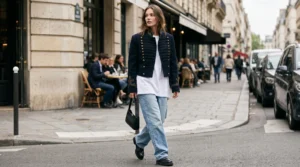
For evening plans, focus on creating rich textural contrast. For example, layer a fitted military coat over a silk midi slip dress in champagne, olive, or deep burgundy. The fluid drape of the silk softens the architectural sharpness of the padded shoulders and double-row buttons.
Meanwhile, menswear and unisex styling benefit from dark, grounded tones. Simply swap a standard sport coat for a napoleon jacket cut in dark navy or washed black. Wear it open over a fine-gauge knit sweater, relaxed tailored chinos, and polished Chelsea boots. Keeping the rest of the outfit clean and pattern-free ensures the embroidery stands out without competing for attention.
Fabrics, Textures, and Modern Variations
Modern textile variations allow this classic cut to complement diverse aesthetic sensibilities:
-
Black Velvet and Brocade: Velvet absorbs light beautifully and creates a luxurious background for antique gold buttons and silver frogging. Thus, it remains ideal for evening events, winter holidays, and cocktail parties.
-
Textured White Tweed: Tweed versions soften the sharp military silhouette and offer a nod to classic Parisian tailoring. As a result, this variation creates an elegant option suitable for office wear and daytime outings.
-
Urban Denim and Washed Cotton: Washed cotton and denim fabrications pare down the formality significantly. Consequently, they make the style as easy to wear as an everyday utility jacket or trucker coat.
-
Rich Jewel Tones: Beyond classic army green and regimental red, modern collections feature emerald, plum, and deep navy. Therefore, they provide versatile styling alternatives for autumn and winter capsules.
Proportions and Fit: Selecting the Right Cut for Your Frame
Because of its distinctive lines, proportion plays a crucial role in how the garment flatters your frame:
-
Cropped Cuts: Jackets that hit at the natural waistline work exceptionally well for petite figures. Specifically, the higher hemline elongates the legs and highlights the waist, which prevents heavy chest frogging from overpowering shorter torsos.
-
Hip-Length and Longline Silhouettes: Taller frames or those seeking extra coverage should opt for cuts that settle at mid-hip. These versions frame the body with balanced symmetry and look striking when worn unbuttoned over high-waisted trousers.
-
Shoulder and Bust Considerations: The defining feature of this style is its shoulder structure. If you have broad shoulders or a fuller bust, choose softer shoulder pads and vertical button placements. This choice streamlines the upper body instead of pulling tightly across the chest.
Alterations, Sourcing, and Longevity
Before taking a piece to your local tailor, remember that modifying this style presents unique challenges. The extensive soutache braiding along the lapels, sleeve cuffs, and back seams makes standard alterations difficult. For instance, shortening the sleeves can disturb ornamental cuff embroidery. Similarly, taking in side seams can distort the symmetry of the front frogging. Therefore, you should always ensure that the shoulder width and sleeve length fit comfortably off the rack.
When hunting for an authentic vintage napoleon jacket on secondhand platforms like Vinted or in local vintage boutiques, inspect the hardware carefully. Verify that all decorative buttons are firmly attached, because sourcing exact replacements can be very tricky. Additionally, test the flexibility of the braiding cords to ensure they have not grown stiff or brittle over time.
To keep the garment in prime condition, avoid standard household washing machines. The delicate threads, metallic cord, and internal chest canvassing require gentle professional dry cleaning. Between wears, use a soft garment brush to remove surface dust from the embroidery. Finally, store the jacket on a broad, contoured wooden hanger to preserve its shoulder structure.
Conclusion
Ultimately, the napoleon jacket proves that thoughtful design never truly fades from relevance. By bridging rich military history with contemporary street style, it offers a refreshing alternative to ordinary outerwear. Whether dressed down with raw denim or styled over a flowing dress, this timeless statement coat adds structure, history, and unmistakable character to any wardrobe.










Leave a Reply