
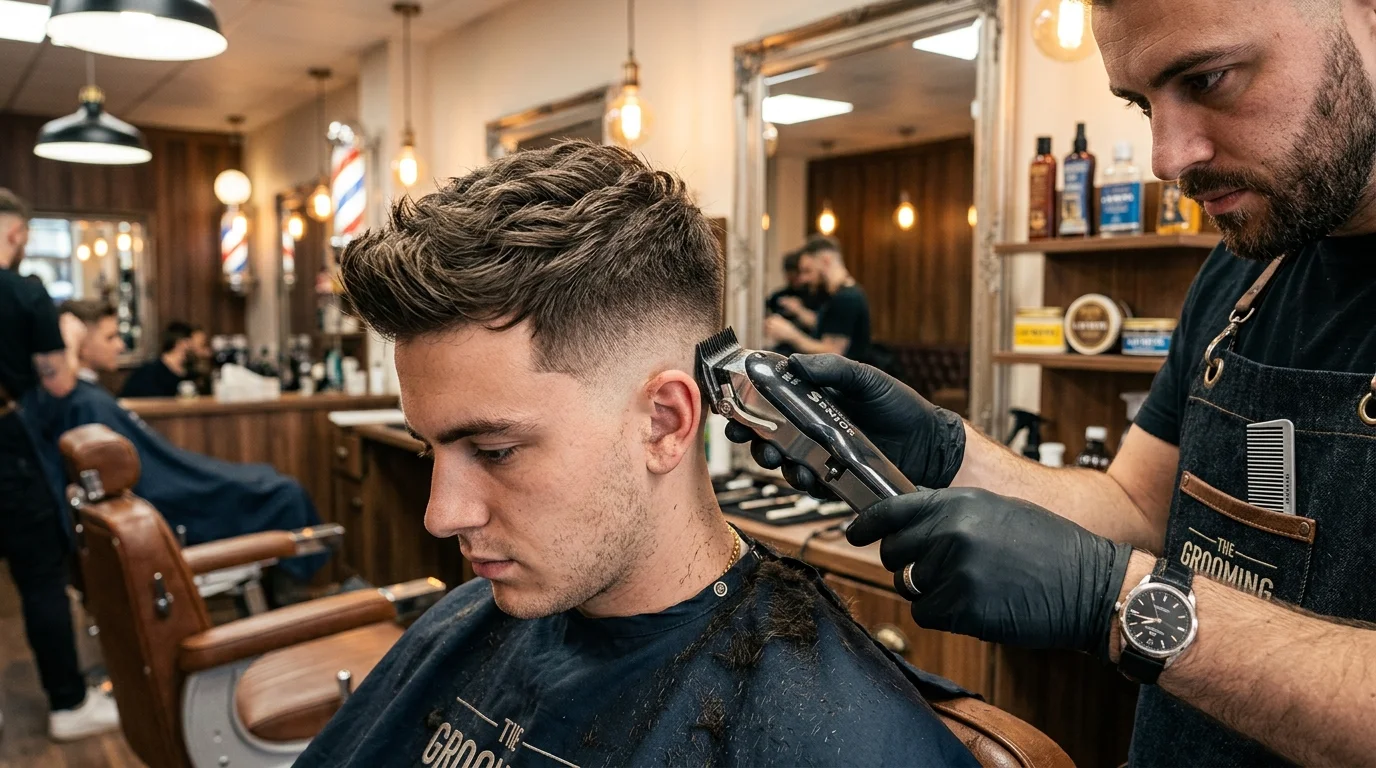
When you walk into a modern barbershop, one request dominates the chair above all others. The fade haircut for men has evolved from a standard military grooming requirement into the absolute foundation of contemporary men’s hairstyling. But what makes this style so universally appealing is not just its clean aesthetic. It is its incredible versatility. A great fade acts like a structural frame for your face, sharpening your jawline and cleaning up your profile.
However, because there are so many variations available today, choosing the right configuration can feel overwhelming. Whether you are aiming for a subtle corporate look or a bold streetwear statement, understanding the anatomy of a blend ensures you get exactly what you want. This comprehensive guide breaks down every variation, guard length, and lifestyle factor so you can step up your grooming game with absolute confidence.
What is a Fade Haircut? The Blending Science
To understand why this cut looks so sharp, you have to look at the blending science behind it. A fade is a precise barbering technique that creates a smooth gradient transition from longer hair on top to progressively shorter hair on the sides and back. The term refers to how the hair appears to literally fade away as it approaches the ears and the neckline.
Fade vs. Taper: The Definitive Difference Explained
People mix these terms up all the time, but they are entirely different approaches to grooming. A classic taper gradually shortens your hair length as it travels down, but it keeps your natural hairline fully intact at the temples and the nape of the neck. It is a conservative, timeless look that leaves some hair everywhere.
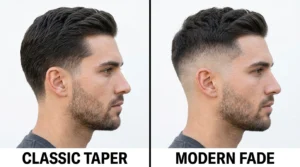
Conversely, a standard fade haircut for men cuts much shorter and typically blends the hair down past the natural hairline, exposing the scalp around the sides and back. If you want a softer, more traditional finish, you ask for a taper. If you want maximum contrast and a crisp perimeter, you want a fade.
Skin Fade vs. Shadow Fade: Contrast and Density
Once you choose a fade, you must decide how short the baseline will go.
-
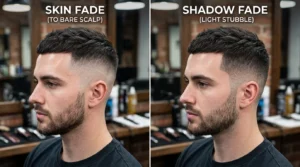
Skin Fade: Also known as a bald fade, this variation blends the hair down to the bare scalp using a zero guard or a straight razor. It creates a striking, high-contrast look that highlights the hair volume on top.
-
Shadow Fade: This version keeps a micro-layer of shadow coverage at the lowest point. Instead of exposing bare skin, the barber leaves a very short length, such as a number 1 guard, creating a softer and more uniform gradient.
The Core Fade Heights: Finding Your Line
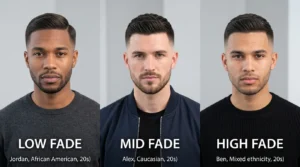
The height of a fade determines where the shortest part of the blend begins. Shifting this line completely changes the geometry of your look.
The Low Fade: Subtle, Professional, and Workplace-Appropriate
The low fade starts approximately one inch above the ear and gradually tapers down to the skin or shadow length at the very bottom. Because the gradient is concentrated low on the head, it leaves plenty of dark hair on the sides. This is the most subtle and conservative option, making it the premier choice for business professionals or first-time fade wearers who want a clean look without being too flashy.
The Mid Fade: The Balanced, Universal Sweet Spot
The mid fade, often called a medium fade, starts the transition right around the temple area, roughly halfway up the sides of your head. This is the most requested style in modern shops because it offers the perfect balance between subtle and bold. It creates strong visual definition without overwhelming your appearance, providing maximum flexibility for any lifestyle.
The High Fade: Bold, High-Contrast, and Edgy
The high fade starts the taper near the top of the head, typically two to three inches above the ear. This creates maximum contrast between the top and the sides, making it a bold, attention-grabbing look. Because it exposes a significant amount of scalp, it acts like a frame that draws all visual attention upward to the volume on top.
Modern and Trending Fade Sub-Types
Beyond the standard vertical heights, modern styling has introduced unique contours that cater to specific subcultures and hair movements.
The Drop Fade: Following the Natural Contour of the Skull
A standard fade runs in a relatively straight horizontal line around the head. A drop fade changes this path by curving downward behind the ear, following the natural shape of your skull. This creates a distinctive organic arc that looks incredibly sleek from a side profile, making it a highly popular choice when paired with wavy or curly hair on top.
The Burst Fade and Burst Taper: The Modern Mullet Upgrade
The burst fade is cut in a clean semicircle shape directly around the ear. The hair drops down behind the ear and leaves the hair at the back of the neck long. This specific technique has become the driving force behind the modern textured mullet trend, offering a beautiful contrast between aggressive, clean sides and a long, flowing back.
The Scissor Fade: The Lost Art of Soft Blending
While most modern gradients rely entirely on electric clippers, the classic scissor fade is executed using a scissor-over-comb method. This artisan technique delivers a remarkably soft, organic transition that eliminates the rigid look of clippers. It is highly recommended for men who prefer a premium, tailored look with longer hair lengths on the sides.
The Fade Selection Matrix: Customizing for Your Features
A major mistake many men make is choosing a haircut based solely on a photo of someone else. The perfect style must be tailored to your specific physical traits.
Face Shape Compatibility
-
Oval Face: You can wear almost any variation safely. Your features are naturally balanced.
-
Round Face: Go for a mid or high fade haircut for men. Adding height on top while keeping the sides ultra-short creates the visual illusion of a longer, more structured face.
-
Square Face: Low to mid variations complement a strong, angular jawline beautifully without making your head look overly boxy.
-
Long Face: Stick to a low fade or a classic taper. High variations add extra vertical length, which can make a long face look disproportionately narrow.
Adapting the Fade to Hair Textures
Your natural hair pattern dictates how smoothly a gradient blends. Straight hair holds incredibly sharp, visible lines, meaning your barber’s precision clipper work will be on full display. Wavy and curly hair textures look stunning when paired with mid or drop variations, as the clean sides create an excellent contrast with the natural movement on top. Coily and afro hair textures are perfectly suited for crisp skin fades or temple fades, allowing for sharp geometric lines and impeccable daily structure.
The Barber Chair Translation Blueprint
The greatest source of bad haircuts is poor communication. To get exactly what you want, you need to speak your barber’s language. Use this practical checklist during your next consultation:
-
Specify the Height: Clearly state whether you want a low, mid, or high starting point.
-
Define the Lowest Length: Ask for a skin fade if you want bare scalp, or specify a guard size, like a number 1 or number 2, if you want a shadow effect.
-
Clarify the Top Style: Explain how you plan to wear the top, whether it is a textured crop, a classic pompadour, a quiff, or a relaxed comb over.
-
Bring Visuals: A picture is worth a thousand words. Always show a reference image that features a hair texture similar to your own.
The Fade Maintenance and Growth Lifecycle
Maintaining the crisp perimeter of a fresh cut requires an honest look at your schedule and your grooming budget.
How Often Should You Visit the Barbershop?
Because hair grows roughly half an inch per month, high-contrast variations like the high skin fade show growth incredibly fast. If you want to keep that ultra-sharp look, you will need a touch-up every one to two weeks. If you choose a more forgiving style like a low shadow fade or a taper, you can easily stretch your visits to every three to four weeks before the blend loses its structure.
The Awkward Phase Survival Guide
As a fade haircut for men transitions over three weeks, the short sides will begin to puff out. To survive this growth phase without looking unkempt, focus heavily on styling the top. Use a premium matte clay or a texture paste to keep the top structured and clean. Additionally, using a small home trimmer to clean up the hair directly on the back of your neck between barber visits will instantly make your entire haircut look fresher and last a week longer.
FAQs
Is a fade appropriate for a professional office environment?
Yes, absolutely. A low fade or a taper fade is exceptionally workplace-appropriate. It offers a clean, polished, and tailored appearance that shows you pay meticulous attention to your personal presentation.
How long does a fade haircut take in the barber chair?
A high-quality fade haircut for men requires immense precision and blending across multiple guard sizes. Expect to spend 30 to 45 minutes in the chair for a proper, well-blended execution.
Can I get a fade if my hair is thinning on top?
Yes. In fact, a low or mid skin fade is one of the best optical tricks for thinning hair. By cutting the sides down to the skin, you reduce the visual contrast between the sides of your head and the top, making the hair on top look automatically thicker and fuller.











Leave a Reply