
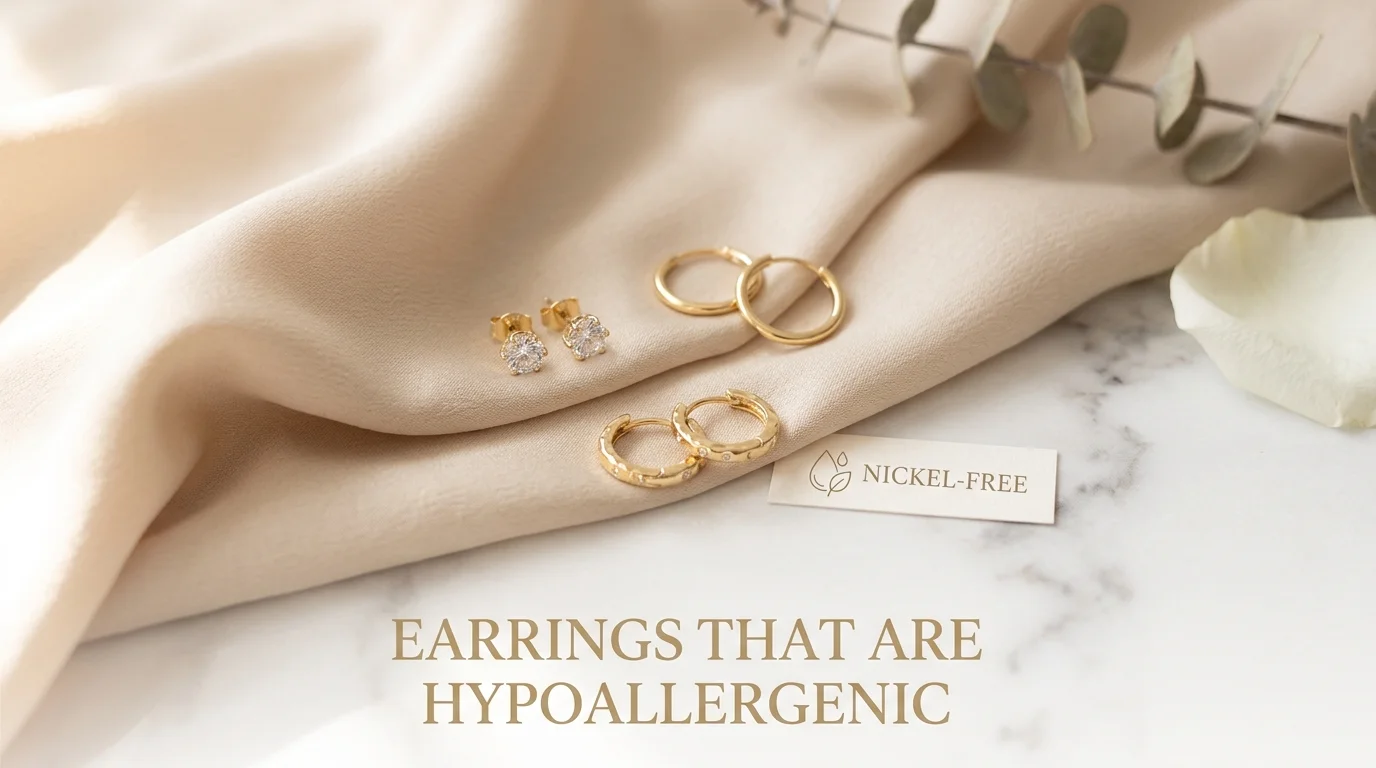
Finding comfortable earrings can feel frustrating when your ears react to certain metals. If you are searching for earrings that are hypoallergenic, the goal is simple: to find jewelry that looks beautiful, feels comfortable, and reduces the risk of itching, redness, swelling, or irritation. In many cases, the material causes the problem, not the style of the earring.
This is why many people search for earrings that are hypoallergenic. These earrings use materials that reduce the chance of irritation, especially for people with a nickel allergy, metal allergy, or earring sensitivity. With the right pair, you can wear studs, hoops, huggies, or everyday earrings with more comfort and confidence.
What Are Hypoallergenic Earrings?
Hypoallergenic earrings use skin-friendly materials that help reduce irritation. They suit people with sensitive ears, sensitive skin, or a history of allergic reactions to earrings.
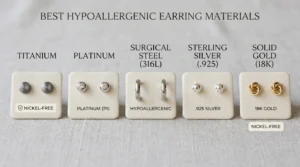
The word hypoallergenic does not mean completely allergy-free. It means the earrings have a lower chance of causing a reaction compared to cheap alloy jewelry or earrings made with unknown metal blends. Jewelry makers often use titanium, surgical steel, sterling silver, solid gold, platinum, or niobium for high-quality hypoallergenic earrings.
Material transparency matters most. A reliable jewelry product should clearly mention its metal composition. If the description only says fashion metal, mixed alloy, or plated metal without details, it may not suit sensitive ears.
Why Do Some Earrings Irritate Sensitive Ears?
Nickel and low-quality alloy metals often irritate sensitive ears. Many manufacturers use nickel in inexpensive jewelry because it adds strength and keeps costs low. However, nickel can trigger contact dermatitis in many people.
When your skin reacts to nickel, you may notice itching, redness, swelling, burning, dryness, or discomfort around the piercing. Some people also see green marks from earrings when metals react with sweat, moisture, or skin oils.

Nickel-free earrings often help people with sensitive ears, but they do not solve every problem. The overall metal quality, coating, weight, and design also affect comfort.
Common Signs You Need Hypoallergenic Earrings
You may need hypoallergenic earrings if your ears often become sore, red, itchy, or swollen after wearing jewelry. Another clear sign appears when one pair feels comfortable, but another pair irritates, especially with cheaper earrings or heavily plated designs.
Heavy earrings can also cause discomfort. In that case, the issue may come from both material sensitivity and pressure on the piercing. Lightweight earrings made from safe metals usually work better for daily wear. If irritation keeps happening, switching to earrings that are hypoallergenic can make a noticeable difference.
Nickel-Free vs Hypoallergenic Earrings: What Is the Difference?
Nickel-free earrings contain no nickel, which makes them safer for people with a nickel allergy. Hypoallergenic earrings fall under a broader category because they use materials that are usually gentler on sensitive skin.
For example, titanium earrings and platinum earrings often work well because they offer strong biocompatibility. Surgical steel earrings may also suit sensitive ears when the product uses high-quality metal and clear labeling. Sterling silver earrings can work too, but buyers should confirm that the silver is nickel-free. The best option combines both qualities. Choose earrings that are nickel-free and hypoallergenic for better protection against common irritation triggers.
Best Hypoallergenic Earring Materials
Titanium Earrings for Sensitive Ears
Titanium ranks among the best metals for sensitive ears. It feels lightweight, resists corrosion, and appears in many medical applications. Implant-grade titanium earrings suit people who react to many other metals.
This metal also works well for newly pierced ears because it feels gentle and adds very little weight to the piercing. If your ears react easily, titanium should be one of your first choices.
Surgical Steel Earrings for Everyday Wear
Surgical steel earrings remain popular because they offer durability, affordability, and everyday comfort. Many piercers and jewelry brands use surgical stainless steel for body jewelry and piercing jewelry.
Not all stainless steel offers the same quality. If your ears react easily, look for high grade surgical steel with clear product details. Avoid earrings that only say stainless steel without explaining the quality or composition.
Sterling Silver Earrings with Nickel-Free Quality
Sterling silver earrings can offer style and comfort when they use nickel-free silver. Sterling silver usually contains pure silver mixed with other metals for strength, so the alloy quality matters. If you love silver jewelry, buy from sellers who clearly mention nickel-free sterling silver. This detail helps reduce the risk of earring allergy and irritation.
14K and 18K Gold Earrings
Solid gold earrings usually feel safer than cheap gold-plated earrings for sensitive ears. 14K gold offers durability for regular use, while 18K gold contains more pure gold and gives a richer look.
Choose solid gold rather than low-quality plating. When plating wears off, the base metal underneath may touch your skin and cause irritation.
Platinum Earrings for Premium Comfort
Platinum offers one of the safest and most luxurious choices for sensitive ears. It lasts well, resists tarnish, and rarely triggers skin reactions. Although platinum earrings cost more, they can become a smart long-term investment for people who want elegant jewelry with excellent comfort.
Niobium Earrings as a Gentle Alternative
Niobium may not be as common as gold or silver, but it works well for sensitive ears. It contains no nickel, feels lightweight, and usually sits comfortably against the skin. People who cannot tolerate many common jewelry metals may find niobium earrings comfortable and reliable.
Materials to Avoid If You Have Sensitive Ears
If your ears react easily, avoid earrings made from nickel, unknown alloys, cheap fashion metals, and low-quality gold plating. These materials can cause itching, redness, swelling, and soreness. Be careful with earrings that do not clearly mention their metal content. A vague product description often signals risk. When buying online, check the material details before you focus on design or price.
Best Earring Styles for Sensitive Ears
Hypoallergenic Stud Earrings
Stud earrings often suit sensitive ears because they stay simple, lightweight, and easy to wear. They do not pull heavily on the piercing, which makes them ideal for daily use.
Hypoallergenic Hoop Earrings
Hoop earrings can feel comfortable when they use safe metals like titanium, surgical steel, solid gold, or platinum. Lightweight hoops usually work better than thick or heavy designs.
Hypoallergenic Huggie Earrings
Huggie earrings sit close to the ear and offer a secure fit. They suit people who want stylish earrings without too much movement or weight.
Flat-Back Earrings
Flat-back earrings help people who want comfort during long wear. They reduce pressure behind the ear and often work well for cartilage piercings or daily jewelry.
Lightweight Everyday Earrings
Lightweight earrings matter because even safe metals can feel uncomfortable when the design feels too heavy. For daily wear, choose smooth edges, secure backs, and comfortable shapes.
How to Choose Truly Hypoallergenic Earrings
The best way to choose hypoallergenic earrings is to focus on metal quality, not just appearance. Look for clear product descriptions that mention titanium, implant-grade titanium, surgical steel, nickel-free sterling silver, solid gold, platinum, or niobium.
Avoid jewelry that uses unclear terms like mixed metal, fashion alloy, or gold tone. These words do not explain the actual metal. If you have sensitive ears, missing material information can lead to irritation. Customer reviews can also help. Reviews from people with sensitive ears often reveal whether the earrings feel comfortable during long wear.
Mistakes People Make When Buying Earrings for Sensitive Ears
Many buyers assume that expensive earrings always feel safe. Price alone does not guarantee comfort. The material matters more than the brand name or design. Another common mistake is buying gold-plated jewelry without checking the base metal. If the plating fades, the metal underneath may touch your skin and irritate.
Some people also ignore weight. Heavy earrings can stretch the piercing and create soreness, even when the metal itself feels safe. For sensitive ears, the best earrings should combine hypoallergenic metal with a comfortable design.
How to Care for Hypoallergenic Earrings
Good care helps your earrings stay clean, comfortable, and safe for regular use. Wipe your earrings with a soft cloth after wearing them and store them in a dry place. Sweat, perfume, moisture, and product buildup can affect both the jewelry and your skin.
Try not to wear earrings while swimming, sleeping, or applying perfume around the ears. If your piercing is new, follow professional aftercare instructions and avoid changing earrings too early. Clean jewelry supports healthy piercings. Even the best earrings for sensitive ears need proper care.
When Should You Stop Wearing Earrings?
Stop wearing earrings if your ears become severely swollen, painful, or infected. Remove the earrings if you notice discharge, bleeding, intense burning, or symptoms that do not improve.
Mild irritation may improve after switching to safer materials, but persistent symptoms need attention. Give your ears time to heal before wearing jewelry again.
Final Buying Checklist for Sensitive Ears
Before buying earrings, check the material, nickel-free quality, weight, and comfort. Safer choices usually include titanium, surgical steel, sterling silver, solid gold, platinum, or niobium. A good pair should mention the metal clearly, feel lightweight, and suit daily wear. The safest choice usually combines high-quality material with a comfortable design.
FAQs
What are the best earrings for sensitive ears?
Titanium earrings, implant-grade titanium earrings, platinum earrings, surgical steel earrings, and solid gold earrings often work best for sensitive ears. Nickel-free sterling silver may also suit many people.
Are sterling silver earrings hypoallergenic?
Sterling silver earrings can be hypoallergenic when they use nickel-free, high-quality silver. Always check the product description before buying.
Are gold-plated earrings safe for sensitive ears?
Gold-plated earrings do not always suit sensitive ears. If the plating wears off and the base metal contains nickel or cheap alloy, irritation can happen.
Are titanium earrings good for sensitive ears?
Yes, titanium earrings work very well for sensitive ears. They feel lightweight, strong, and less likely to cause an allergic reaction.
How do I know if earrings are nickel-free?
Check the product description, metal details, and seller information. Trusted sellers clearly mention nickel-free, lead-free, or medical-grade materials.
Conclusion
Sensitive ears should not stop you from wearing beautiful jewelry. The key is to choose safe metals, avoid unclear alloys, and consider comfort as much as style.
Earrings that are hypoallergenic help people who experience itching, redness, swelling, or discomfort from regular jewelry. By choosing titanium, surgical steel, sterling silver, solid gold, platinum, or niobium, you can enjoy earrings that look stylish and feel comfortable throughout the day.


















Leave a Reply