
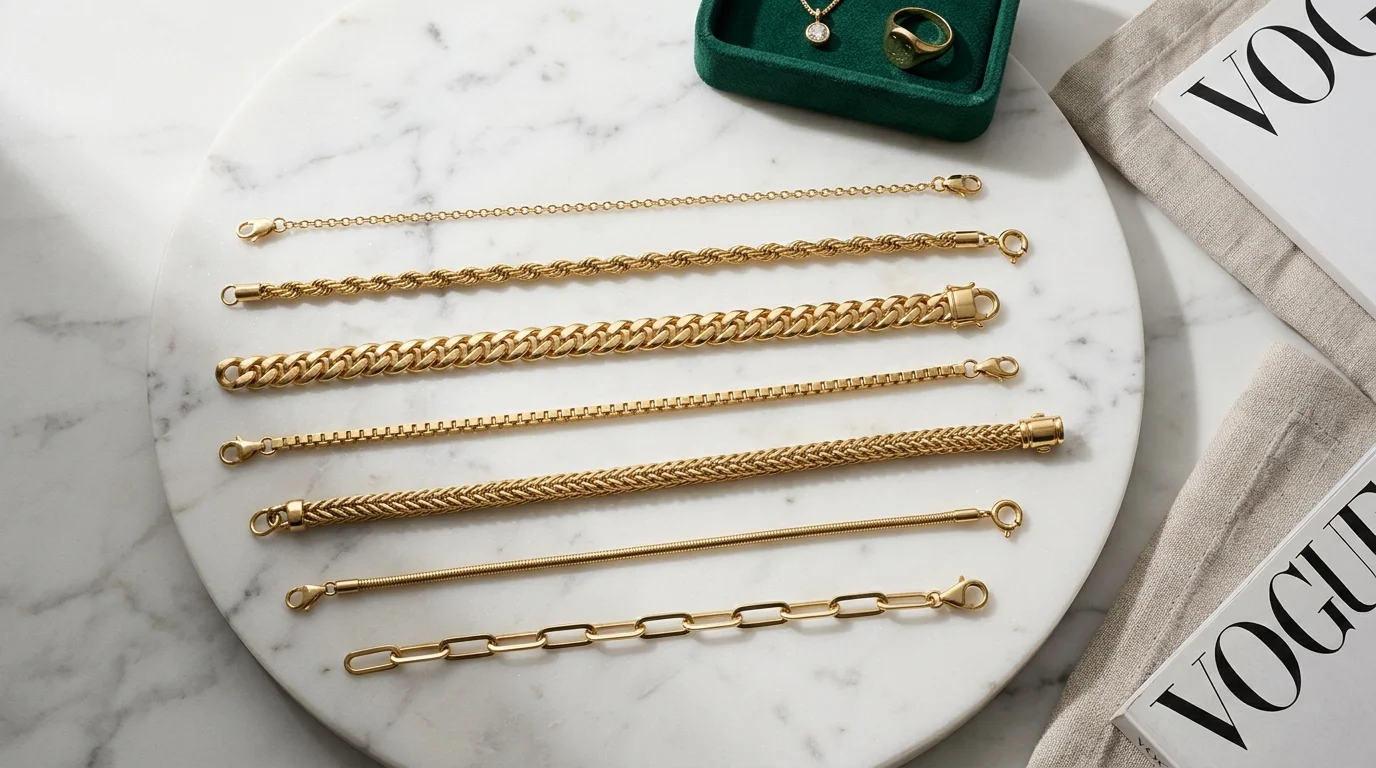
Choosing a necklace is not only about metal, price, or shine. The chain style matters because it affects comfort, durability, pendant support, and the overall look of the jewelry. With so many kinds of chains available, it is easy to choose something attractive without knowing whether it is right for daily wear, layering, or heavier pendants.
This guide explains the most popular types of necklace nearly. Instead of only listing names, it shows how each chain looks, what it is best used for, which styles are stronger, and which ones need extra care. As a result, you can choose a chain that matches your style, budget, pendant, and lifestyle.
What are necklace chains?
Necklace chains are made from connected metal links or shaped sections that form a flexible strand. However, not every chain is built for the same purpose. Some chains are made for strength, while others are designed for shine, texture, elegance, or layering.
Understanding the main kinds of chains means looking beyond appearance. Link shape, chain thickness, clasp quality, metal type, pendant weight, and daily use all matter. For example, a thin snake chain may look sleek, but a box chain or Franco chain is usually a safer choice for regular pendant wear.
Chain links come in many forms. Oval links are common in cable, curb, Figaro, and mariner chains. Round links often appear in rolo or belchers. Square links create the clean structure of a box chain, while rectangular links give the paperclip chain its modern look. In addition, twisted and woven links create the texture found in rope, wheat, Franco, foxtail, and Byzantine.
It is also important to separate chain style from chain material. A rope chain can be made from 14k gold, sterling silver, stainless steel, gold vermeil, or platinum. Therefore, the style affects the look and structure, while the material affects price, durability, weight, tarnish resistance, and skin comfort.
25 popular necklace chain types
1. Cable chain
The cable chain is one of the most classic necklace styles. It uses simple round or oval links connected in a repeating pattern. Because of its clean structure, it works well with pendants, charms, lockets, and everyday outfits.
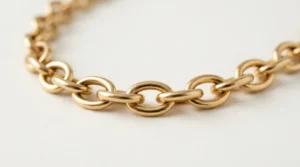
This chain is easy to style and usually easy to repair. Moreover, it does not overpower a pendant, which makes it a smart choice for anyone who wants a simple and dependable chain.
2. Rope chain
Rope chains are made from twisted links that look similar to a real rope. This design reflects light from different angles, so the chain often appears brighter than simpler link styles.
Because rope chains are strong and decorative, they can be worn alone or with pendants. A thin rope chain feels elegant, while a thicker version creates a more noticeable statement.
3. Box chain
A box chain is built with square links that create a smooth, geometric appearance. It feels modern, neat, and strong without looking too heavy.
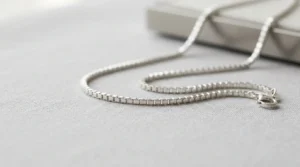
For pendants, this is one of the best types of necklace chains. It has enough structure to hold small to medium pendants, and it is less likely to tangle than many delicate chain styles.
4. Cuban chain
The Cuban chain has thick, rounded, closely interlocking links. It is strongly associated with bold men’s jewelry, luxury styling, and statement pieces. Although Cuban chains can hold some pendants, thicker versions usually look better on their own. The chain itself becomes the main feature, especially when made in gold or stainless steel.
5. Curb chain
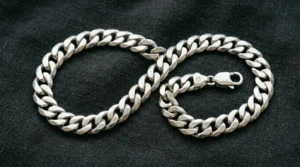
Curb chains use flat interlocking links that sit smoothly against the skin. They are related to Cuban chains, but they usually look flatter and more classic. This is durable, versatile, and suitable for men, women, and unisex styling. A slim curb chain can support a pendant, while a thicker curb works better as a standalone necklace.
6. Figaro chain
The Figaro chain uses a repeating pattern of short links followed by one longer link. As a result, it has more visual interest than a basic cable chain. Figaro chains are popular in both gold and silver jewelry. They suit casual outfits, dressier looks, and pendant styling when the pendant size matches the chain thickness.
7. Franco chain
A Franco chain is made with tightly connected V-shaped links. It is one of the strongest necklace chain styles and is often chosen for heavy pendants, medallions, and daily wear. Unlike many flat chains, the Franco is less likely to kink. It also looks refined, so it works well for people who want durability without losing style.
8. Wheat chain
Wheat chains have woven links that resemble grains of wheat. The design feels smooth, flexible, and elegant. Because the structure is dense and supportive, a wheat chain is a good choice for everyday use. It works well with pendants, although it also looks polished enough to wear alone.
9. Rolo chain or belcher
A rolo chain, also called a belcher chain, uses round links that are usually thicker and more balanced than cable chain links. The result is a soft and casual look.
This chain is useful for charms and small pendants. While it is not as sleek as a box chain or snake chain, it is practical, comfortable, and easy to wear.
10. Paperclip chain
Paperclip chains have long rectangular links that resemble paperclips. Their open shape gives them a modern, airy look.

They are especially popular for layering because they add shape without feeling too heavy. In addition, a paperclip chain can look minimal when worn alone or more fashionable when paired with shorter and longer chains.
11. Snake chain
Snake chains have a smooth surface made from tightly connected metal plates or rings. They look sleek, polished, and fluid.
However, this style is not the best option for heavy pendants. These can kink or bend, and once damaged, they may be difficult to repair. Therefore, they are better for solo wear or very light pendants.
12. Herringbone chain
These have flat, closely arranged V-shaped links. They lie flat against the skin and reflect light beautifully. Even though they look elegant, they need careful handling. A herringbone chain can crease if folded sharply, so it is usually better as a standalone necklace rather than a pendant chain.
13. Singapore chain
The Singapore chain has twisted, diamond-cut links that create sparkle and movement. It looks delicate, feminine, and bright.
This chain is suitable for layering and light pendants. However, it is not ideal for heavy pendants or rough daily use because thinner versions can be fragile.
14. Mariner chain or anchor chain
A mariner chain, also known as an anchor chain, has oval links with a bar across the center. The design is inspired by nautical anchor chains.
Mariner chains are strong and distinctive. They suit bold styling, and they can work for both men and women. Thicker versions are usually better without pendants because the link pattern already stands out.
15. Ball chain or bead chain
Ball chains are made from small metal balls connected by short bars or wire. They are often used for dog tags, casual pendants, and simple everyday jewelry.
Although they are not usually seen as luxury chains, they are practical and recognizable. They work best with light pendants and casual outfits.
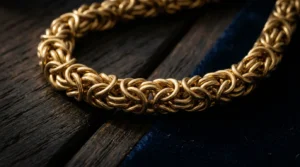
16. Byzantine
The Byzantine chain has a complex woven pattern made from interlocking links. Its design looks detailed, textured, and decorative. Because this chain is already ornate, it is usually worn alone. It suits statement jewelry, although it may feel heavier than simpler chain styles.
17. Foxtail
Foxtail chains use woven links that create a smooth V-shaped pattern. The style feels refined without looking as bold as a Cuban. This chain can work alone or with selected pendants, depending on thickness and flexibility. In many cases, it is chosen for elegant styling rather than casual everyday use.
18. Spiga
A spiga chain is closely related to wheat. It has a braided pattern that gives it strength, texture, and flexibility. This style is a good option for people who want a durable chain with a softer, more elegant appearance. It is common in gold and silver jewelry.
19. Mesh
Mesh chains are made from tightly woven metal that creates a smooth, fabric-like surface. Their appearance is sleek, modern, and polished. Since the surface is part of the design, mesh chains are usually worn alone. They are not commonly chosen for pendants because the pendant can distract from the chain’s texture.
20. Popcorn
Popcorn chains have a rounded, textured appearance. They often feel lightweight while still adding visible shine.
This style is useful for people who want texture without the weight of a large Cuban or Byzantine chain. It works best as a standalone necklace.
21. Omega chain
Omega chains are structured and smooth, often sitting close to the neck like a collar. They create a formal and polished look. However, they are not very flexible. They should be stored carefully and should not be twisted. For that reason, omega chains are better for dressy outfits than rough daily wear.
22. Trace chain
Trace chains are fine chains made from small oval links. They are simple, delicate, and often used for small pendants.
This chain is a good match for minimal jewelry. Still, very thin versions should not be used with heavy pendants or worn during exercise.
23. Satellite chain
Satellite chains have tiny beads spaced along a fine chain. They are popular for layering because they add detail without looking heavy.
The style is delicate and modern. Therefore, it works best for light pendants, dainty jewelry, and softer outfits.
24. Coffee bean
Coffee bean chains use links shaped like coffee beans. The look is more distinctive than cable, box, or rope chains. This chain is often chosen for bold styling. It can look strong in gold, silver, or stainless steel, especially when the wearer wants something less common.
25. Chainmaille
These use interwoven rings inspired by chainmail armor. The texture is artistic, detailed, and bold. Because the pattern already has strong visual impact, this chain usually does not need a pendant. It works best as a statement piece.
Strongest necklace chains ranked
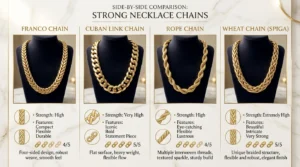
The strongest usually have tight link structures, solid construction, good thickness, and secure clasps. Franco, wheat, rope, box, curb, and Cuban chains are among the best choices for strength.
Franco chains are excellent for heavy pendants because their V-shaped links support weight well. Wheat chains also perform well because their woven structure gives both flexibility and strength. Rope chains are strong and shiny, while box chains are clean and reliable for pendant wear. In addition, curb and Cuban chains offer strong interlocking links, especially in thicker widths.
However, thickness still matters. A thin version of a strong chain style can break more easily than a thicker version of a simpler chain. For daily wear, solid construction is usually better than hollow construction.
Most delicate chains to wear carefully
Some necklace chains are beautiful but not built for heavy use. Snake chains, herringbone chains, omega chains, thin trace chains, and thin satellite chains should be handled with care.
A snake chain can kink if bent sharply. Similarly, a herringbone chain can crease because of its flat structure. Omega can lose shape if twisted, while thin trace and satellite chains may break under the weight of large pendants.
This does not mean these chains are bad. Instead, it means they should be worn for the right reason. If you want elegance for occasional wear, they can be excellent. If you need a strong everyday chain, choose box, rope, Franco, wheat, cable, curb, or Cuban styles instead.
Best chains by use case
The right chain depends on how you plan to wear it. For pendants, box, cable, rope, Franco, and wheat chains are some of the best choices. Box chains are clean and modern, cable chains are classic, rope chains add shine, Franco chains support heavier pendants, and wheat chains offer a refined look.
For heavy pendants, strength should come before style. Franco, curb, Cuban, rope, and wheat chains are stronger options. In contrast, snake, herringbone, hollow, and very thin chains should be avoided for heavy pendants.
For everyday wear, cable, rope, box, wheat, and Franco are practical choices. They are comfortable, durable, and easy to style. Also, they do not require the same level of careful handling as herringbone or omega chains.
Layering works best when chains have different lengths, textures, and thicknesses. Paperclip, cable, satellite, Singapore, and box chains are useful for this purpose. For example, a short cable chain can be paired with a longer paperclip chain and a delicate satellite chain for a balanced layered look.
Men often prefer Cuban, curb, Franco, rope, Figaro, and mariner chains because they offer strength, weight, and a bolder appearance. Meanwhile, popular women’s styles include cable, paperclip, Singapore, snake, satellite, box, and rope chains. Still, many chains are unisex, especially cable, rope, Figaro, curb, and box.
Gold, silver, stainless steel, or platinum:
Chain material affects price, durability, weight, color, and maintenance. Therefore, the same chain style can feel completely different depending on the metal.
Gold chains are classic and valuable. Common options include 10k, 14k, and 18k gold. A 14k gold often gives a practical balance of durability and gold content, while 18k gold has a richer color but can be softer. Yellow gold feels traditional, white gold looks modern, and rose gold has a warmer tone.
Sterling silver chains are affordable, bright, and popular. However, they can tarnish over time, so regular cleaning is important. Stainless steel are more low-maintenance and durable, which makes them common in modern and men’s jewelry. Platinum is premium, strong, and heavier than many other metals, although they are usually more expensive.
Gold plated chains have a thin gold layer over another metal. Gold vermeil usually has a thicker gold layer over sterling silver. Solid gold costs more, but it lasts longer with proper care. For daily wear, solid gold, sterling silver, stainless steel, or platinum is usually better than thin plating.
Chain length and width guide
Length and width affect both appearance and function. A 16-inch chain usually sits close to the neck, while an 18-inch chain is a common everyday length. A 20-inch chain is popular for men and unisex styling. A 22-inch or 24-inch chain works well with relaxed outfits and larger pendants, while a 30-inch chain creates a longer statement look.
Width is just as important. A 1mm to 2mm chain is best for delicate jewelry and small pendants. A 2mm to 4mm chain is a strong everyday range for most people. A 4mm to 6mm chain looks more visible and gives better support. Anything above 6mm usually creates a bold statement style.
Pendant weight should guide chain thickness. A small pendant can work with a thinner chain, but a heavy pendant needs a stronger one. In addition, the pendant bail must fit over the chain, so always check the opening before buying.
Chain clasp types and why they matter
A chain is only as secure as its clasp. Even a beautiful chain becomes a poor purchase if the clasp is weak or difficult to use.
A lobster clasp is strong, common, and reliable, so it is a good choice for everyday chains and pendant chains. A spring ring clasp is lighter and smaller, but it may not be ideal for heavier jewelry. A box clasp is often used for heavier or more expensive chains because it can look clean and secure. Magnetic clasps are convenient, although they are not the safest choice for valuable necklaces.
Chain style personality guide
Minimalist style works well with cable, box, trace, and satellite chains. These options are simple, clean, and easy to wear. For a bold look, Cuban, curb, Byzantine, and coffee bean chains make a stronger impression.
Classic style is usually best with Figaro, rope, cable, and mariner chains. These designs have lasting appeal and do not feel overly trend-based. For a luxury look, Franco, wheat, herringbone, and omega chains feel polished, especially in gold or platinum.
Trendy styling often includes paperclip, mixed link, satellite, and chunky curb chains. These work especially well for modern outfits and layered necklaces.
FAQs
What are the different kinds of chains?
The most common kinds of chains in jewelry include cable, rope, box, Cuban, curb, Figaro, Franco, wheat, snake, herringbone, paperclip, rolo, mariner, ball, Byzantine, satellite, omega, trace, and more. Each chain has a different link shape, strength level, and style purpose.
What is the strongest necklace chain?
Franco, wheat, rope, Cuban, curb, and box chains are among the strongest necklace chains. However, strength also depends on thickness, metal quality, clasp quality, and whether the chain is solid or hollow.
Which chain is best for pendants?
Box, cable, rope, Franco, and wheat chains are some of the best chains for pendants. They are strong, balanced, and simple enough to let the pendant stand out.
Which chains kink easily?
Snake chains, herringbone chains, omega chains, and some thin flat chains can kink more easily than cable, rope, box, curb, or Franco chains.
Is a hollow worth buying?
A hollow chain can be worth buying if you want a larger look for a lower price. However, it is not the best choice for heavy pendants or rough daily wear.
What chain is best for men?
Cuban, curb, Franco, rope, Figaro, and mariner chains are popular choices for men. They offer strength, weight, and a bold style.
What chain is best for women?
Cable, box, paperclip, Singapore, snake, satellite, and rope chains are popular choices for women. The best option depends on whether the goal is daily wear, layering, pendant use, or formal styling.
What chain thickness should I choose?
Choose 1mm to 2mm for delicate jewelry, 2mm to 4mm for everyday wear, 4mm to 6mm for a stronger visible look, and 6mm or more for bold statement chains.
Conclusion
The best chain depends on your style, budget, pendant size, metal preference, and how often you plan to wear it. If you want a safe everyday option, cable, box, rope, and Franco are reliable choices. If you want a bold look, Cuban, curb, Figaro, and mariner stand out. On the other hand, if elegance matters more than heavy-duty strength, snake, herringbone, omega, satellite, and Singapore chains can work beautifully with proper care.
The best kinds of chains are not always the most expensive or the trendiest. Instead, the right one that matches your pendant, wardrobe, comfort level, and lifestyle.














Leave a Reply